From request to token — understanding inference infrastructure
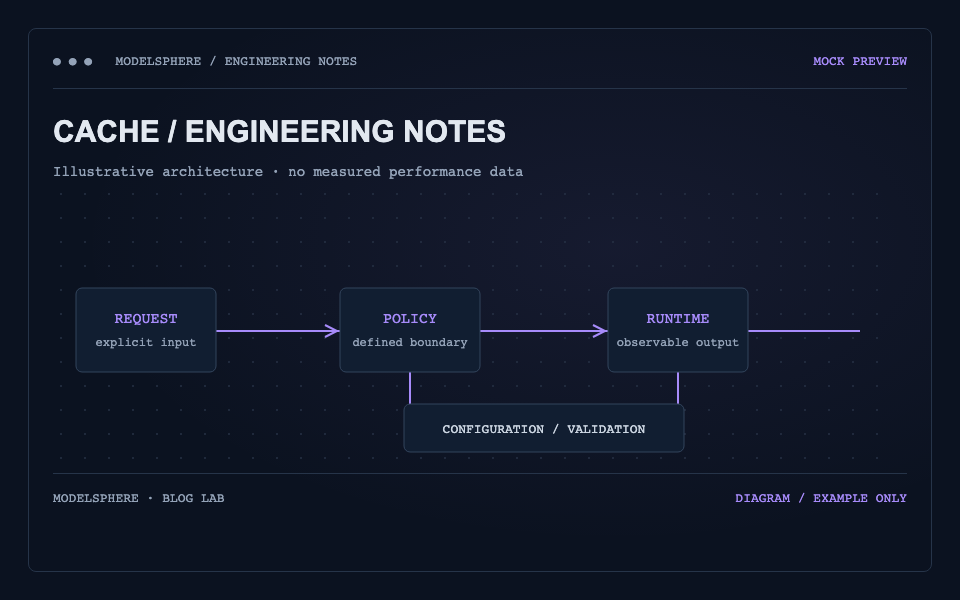
Trace an inference request through deployment, routing, execution, and observability. This example explains each component's inputs, responsibilities, and handoff context using configuration snippets and an illustrative flow. All content illustrates the reading experience; it does not verify product capabilities.
On this page
Start with a single request
This is an example blog post for checking featured articles, tables of contents, images, code, and related reading. The workflow is instructional and includes no capability validation or benchmark results.
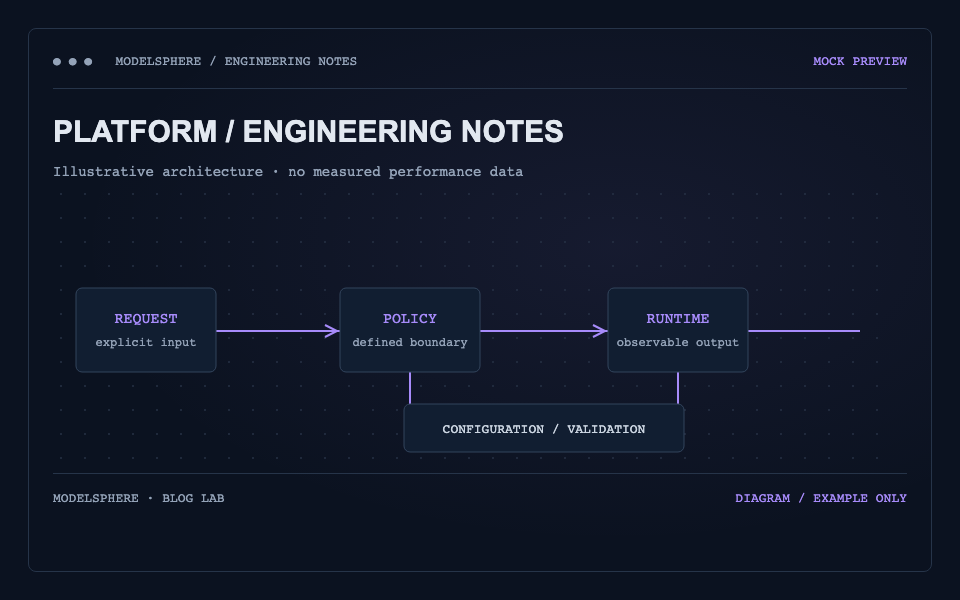
In a hypothetical inference service, a request passes through ingress, routing, and an engine. When reading an architecture, first list the inputs, outputs, and failure paths of each layer.
Define component responsibilities
Ingress and routing
Ingress handles protocol and request boundaries; routing selects a target instance. Check public documentation for the relevant version to understand implementation details and limitations.
Engine and control plane
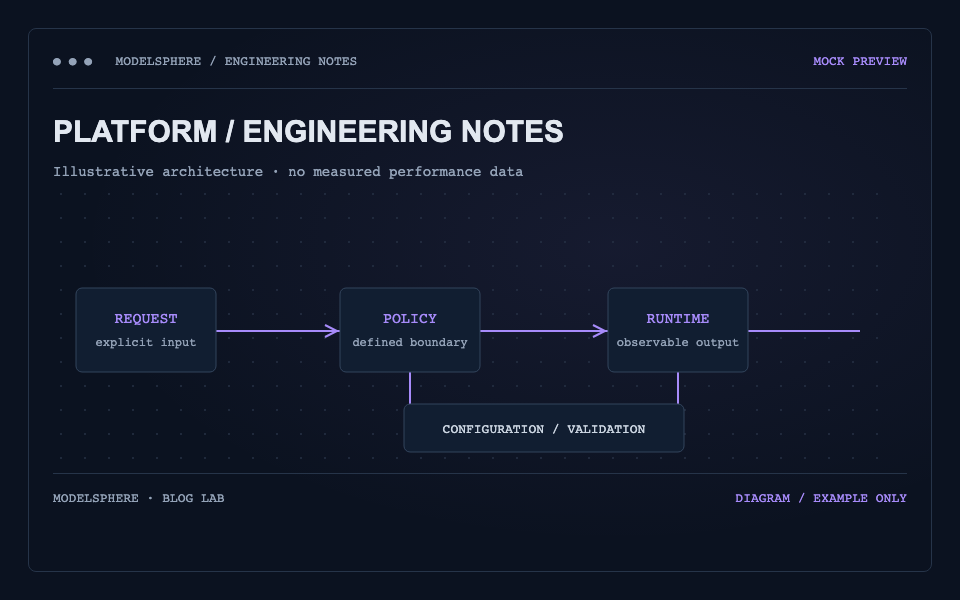
The engine generates output; the control plane maintains desired state. The implementation must establish how they actually work together.
| Question | Evidence to read |
|---|---|
| Who receives a request? | Ingress configuration and protocol documentation |
| Who selects an instance? | Routing policies and failure behavior |
| Who restores a service? | Health checks and control flows |
Record context with configuration
This is a layout example and cannot be deployed.
# Mock configuration — for layout verification only
service:
  name: example-inference
  routing: explicit-policy
  recovery: application-defined
Every published technical conclusion must specify the relevant version, its scope, and verifiable sources.
Continue reading
Read the benchmark conditions example or return to the blog.